
Your Location:Home > Products > Vitamin & Minerals > Sulbutiamine
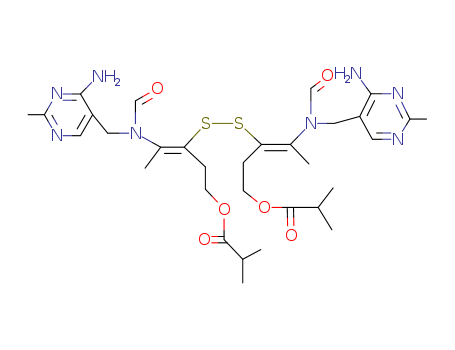
CasNo: 3286-46-2
MF: C32H46N8O6S2
Appearance: White to off-white crystalline powder
|
benefits |
Sulbutiamine belongs to the class of medicines called an artificial vitamin. It contains Sulbutiamine, which is similar to vitamin B1 (thiamine). It is used for the symptomatic treatment of asthenia. SULBUTIAMINE works by increasing the thiamine levels in the brain. It is thought to have mild stimulant effects. Thereby it improves memory and reduces feelings of weakness. It may also be used in combination with other medicines to improve everyday activities in Alzheimer's disease. |
|
Side effects |
Sulbutiamine is very well tolerated at normal doses, with the only reported side effects at normal doses being mild headaches, nausea, and a decline in mood. At very high doses, mild agitation and skin irritation is sometimes reported. For this reason it is not recommended to exceed a dose of 4 capsules per day. Please consult with your physician before taking Sulbutiamine.? |
|
Safety |
Sulbutiamine is a very safe drug, but its effects vary widely depending on the individual. Some people consider it too stimulating yet others find its effects sedative. Despite possible stimulation sulbutiamine is not thought to cause insomnia. Depression and anxiety have been reported occasionally. Large doses can cause headaches. No drug interactions or contraindications are known, but it has been suggested that people with bipolar disorder should not use sulbutiamine. |
|
General Description |
Sulbutiamine is a synthetic derivative of thiamine (vitamin B1) under the market name Arcalion that is composed of two modified thiamine molecules to form a dimer. It is highly lipophilic, allowing it to cross the blood-brain barrier more easily than other thiamine derivatives. Although its clinical efficacy is not yet defined, sulbutiamine is used to treat asthenia. While its other uses include improvement of erectile dysfunction and reduction of psycho-behavioural inhibition, sulbutiamine showed evidence of modulatory effect on dopaminergic and glutamatergic cortical transmissions. The chronic administration of the drug has demonstrated to improve long term memory formation in mice. |
InChI:InChI=1/C32H46N8O6S2/c1-19(2)31(43)45-11-9-27(21(5)39(17-41)15-25-13-35-23(7)37-29(25)33)47-48-28(10-12-46-32(44)20(3)4)22(6)40(18-42)16-26-14-36-24(8)38-30(26)34/h13-14,17-20H,9-12,15-16H2,1-8H3,(H2,33,35,37)(H2,34,36,38)/b27-21+,28-22+
The present invention provides a schub t...

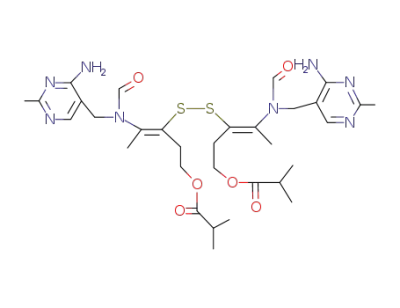
sulbutiamine
| Conditions | Yield |
|---|---|
|
Thiamindisulfid, Isobutyroylchlorid (6,S.13)(7,S.14);
|
|
|
Thiamindisulfid, Isobuttersaeureanhydrid (5,S.12);
|
|
|
aus O-Isobutyroyl-thiamin*HCl mit NaOH + KI (1,S.10);
|
|
|
aus O-Isobutyroyl-thiamin*HCl mit 1.) NaOH (pH 12), 2.) Brom (2,S.11);
|
|
|
aus O-Isobutyroyl-thiamin*HCl mit NaOH (3,S.11);
|
|
|
aus O-Isobutyroyl-thiamin*HCl mit NaOH + K3Fe(CN)6 (4,S.12);
|
|
|
Isobutyrylchlorid, Thiamindisulfid;
|
|
|
Aus dem Thiothiamin;
|
|
|
|
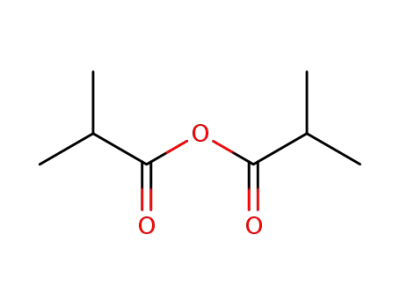
2-Methylpropionic anhydride

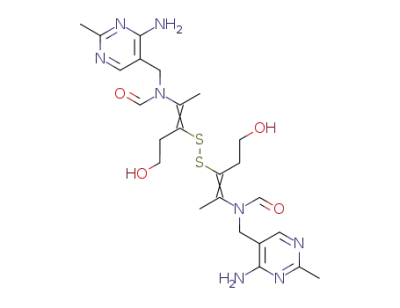
thiamine disulfide
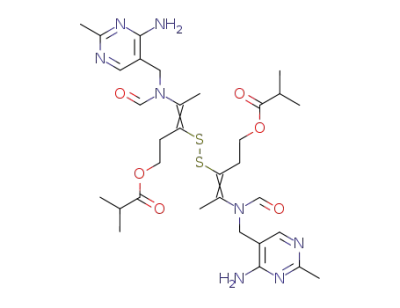
sulbutiamine
| Conditions | Yield |
|---|---|
|
With
dmap;
In
dichloromethane;
at 30 - 50 ℃;
for 2h;
Temperature;
|
85.06% |
2-Methylpropionic anhydride
Address:Room 2108, Building 2,No. 489 Zhengli Road,Shanghai, China ,200433Email:antai@antaibio.com
Tel:0086-21-65663057Phone:+0086-13918425683